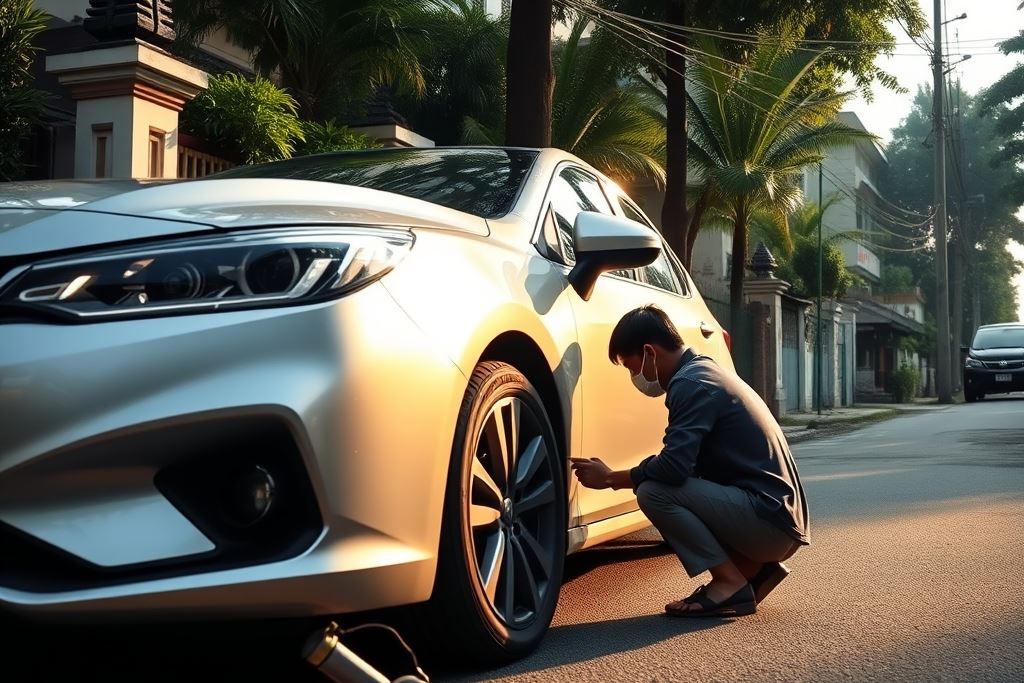
Start with the wheels and the ground beneath
Park on level ground, switch off the engine and wait a few minutes. Walk around the car and look at each tire: uneven wear on one edge usually means alignment or pressure trouble, while a bulging sidewall means the tire should be replaced before the next long drive.
Use a simple gauge and match the figures on the driver-door sticker. In Indonesian heat, pressure rises quickly during a midday drive, so check in the morning. Note the reading for each wheel so you can spot a slow leak over the following months.
Check the fluids while the engine is cold
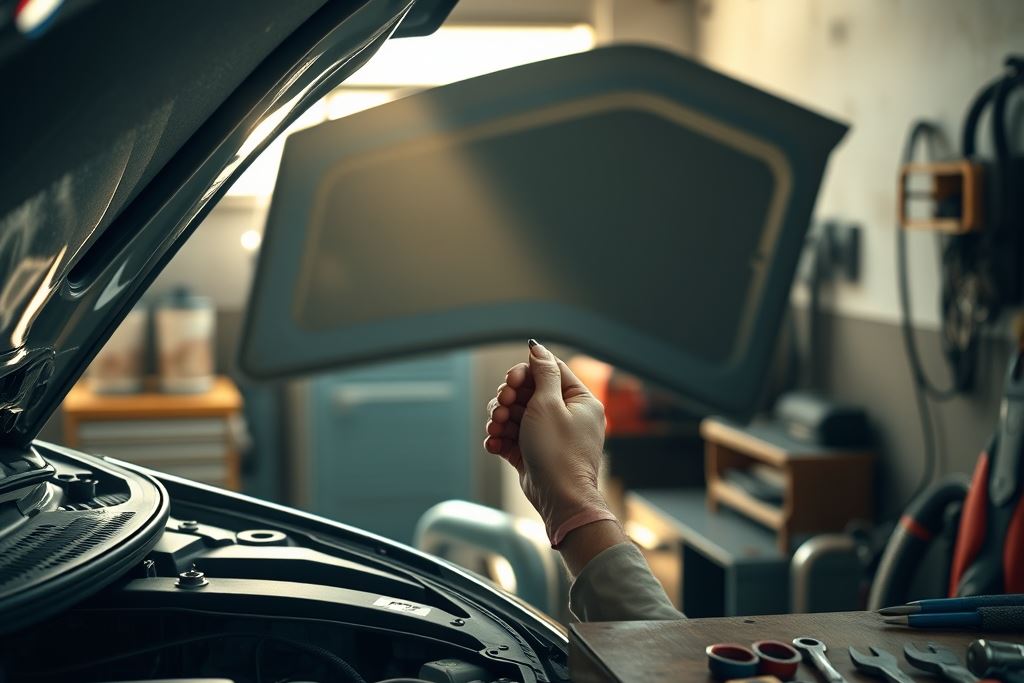
Open the bonnet and check engine oil, coolant, brake fluid and washer water. Wipe the dipstick clean before reinserting it; a misleading reading is worse than no reading. Coolant should sit between the marked lines in the reservoir, never above the maximum when cold.
Look at the floor under the engine too. Clear water from the air conditioner is normal, but brown, red or green patches are not. A few drops can reveal a seal that is about to fail, and an early fix is far cheaper than a replaced component.
Lights, brakes and the cabin checklist
Ask a friend to operate the lights while you stand in front and behind the car. Brake lights are the usual failure point because a blown bulb is easy to miss from the driver seat. Check indicators, hazards, reversing lights and the number-plate lamp as well.
Inside, test the horn, wipers and the warning lights that appear when you turn the ignition on. Any red warning that stays lit after the engine starts deserves attention the same day, not at the next service.
- Tires Pressure, tread depth and sidewall damage on all four wheels plus the spare.
- Fluids Oil, coolant, brake fluid and washer level with the engine cold.
- Lights Headlights, indicators, brake lights and plate lamp verified by a second person.
- Cabin Horn, wipers, seat belts and dashboard warning lights checked before moving.

Write it down and watch the pattern
A note on your phone is enough. Record the date, mileage, tire pressures and anything you topped up. Patterns matter more than single readings: a car that drinks a little coolant every month has a different problem from one that suddenly overheats once.
These notes also help at the workshop. Instead of saying the car feels strange, you can show that the oil level dropped 400 kilometres after the last service. That context turns a vague complaint into a clear diagnostic starting point.

A car rarely fails without warning. It usually whispers for weeks before it shouts.
When to stop checking and call a professional
The walk-around is not a substitute for a scheduled service. If you find a soft brake pedal, steering play, a cracked belt or a warning light that flashes, stop driving and get help. Those symptoms do not improve with another month of observation.
Everything else can wait for your next service appointment. The value of this routine is that you arrive at that appointment with good information and a car that has not been slowly losing fluid or tread in the meantime.
How we checked
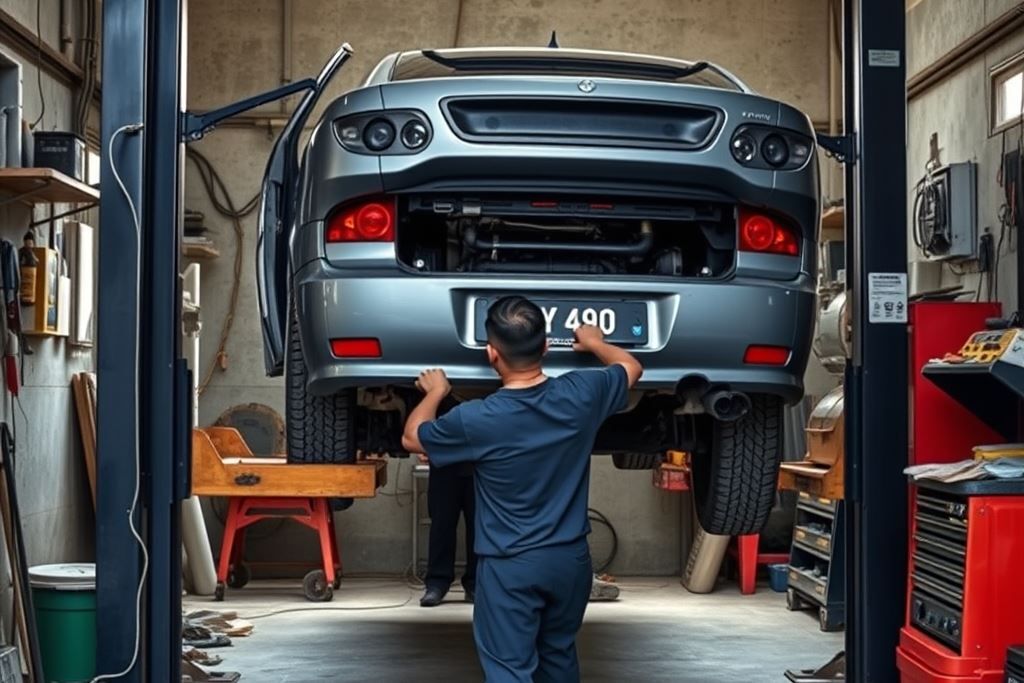
We tested this routine on three family cars over four months, including a ten-year-old hatchback used for daily city driving. Each check was timed, and every issue found was cross-referenced with the workshop invoice that followed. Pressures were measured with the same digital gauge to keep comparisons fair.
Spotted an error? Please contact us — we read every message.